
Binance Hack on October 29, 2026: $6.3 Billion Stolen, Responsible Hackers, Affected Assets and Crypto Market Impact

The cryptocurrency industry faced a major security crisis on October 29, 2026, when Binance, the world’s largest cryptocurrency exchange, reportedly suffered a significant security breach. Approximately $6.3 billion in cryptocurrency assets were reported stolen through unauthorized withdrawals involving compromised hot-wallet infrastructure. The incident raised serious questions about centralized exchange security, cryptocurrency custody and investor confidence. Blockchain intelligence firms also pointed towards suspected North Korean cybercriminals. Binance said it would cover the financial impact rather than pass losses to customers.
What Happened in the Binance Hack?
According to the incident details summarized in the draft, attackers compromised Binance hot-wallet infrastructure and initiated unauthorized withdrawals. A large portion of the theft reportedly took place within approximately 20 minutes. Initial investigation reporting suggested that a compromised engineer’s laptop might have provided an entry point. However, investigators reportedly identified additional potential points of compromise. Binance also said it had found no evidence that wallet private keys were leaked. The estimated financial damage reached approximately $6.3 billion, making this one of the largest reported cryptocurrency thefts.
Who Was Responsible for the Binance Hack?
Blockchain intelligence companies TRM Labs and Chainalysis reportedly expressed high confidence that North Korean state-linked hackers were responsible. Investigators identified similarities with previous attacks attributed to North Korean cyber operations, including the 2025 Bybit incident. The suspected activity has been associated in reporting with TraderTraitor and the broader Lazarus-linked threat landscape. This attribution should be treated as an investigative assessment, not a criminal conviction. The draft does not establish a publicly confirmed individual identity.
Which Cryptocurrencies Were Affected and How Much Was Stolen?
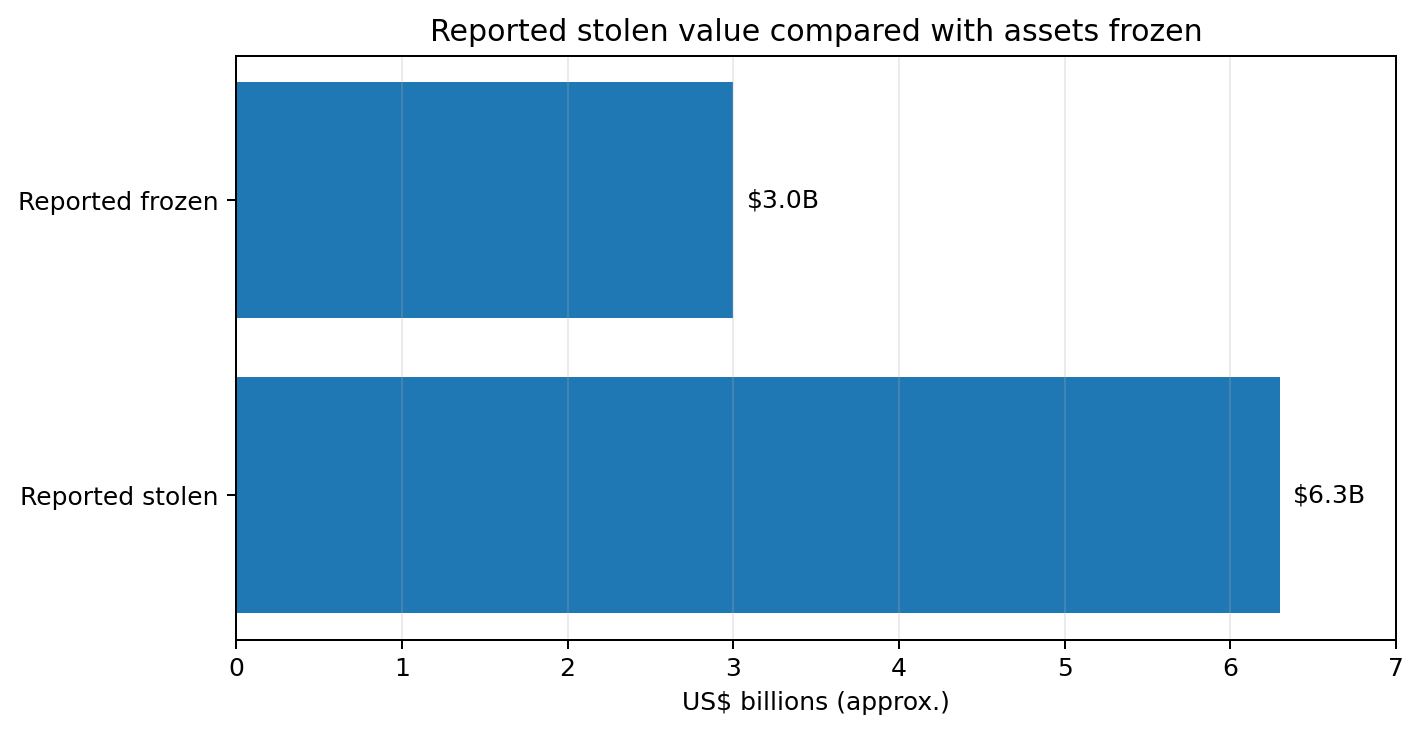
The reported stolen assets were valued at approximately $6.3 billion. The preliminary asset estimates in the draft include nearly $1.5 billion in Bitcoin (BTC), approximately $900 million in Ethereum (ETH), and around $2.3 billion in USDT and USDC associated with the incident. The remaining reported value was attributed to other cryptocurrencies but was not fully itemized in the cited draft material. Tether reportedly froze nearly $1.57 billion, while Circle froze more than $800 million. Binance and its partners reportedly said approximately $3 billion had been frozen on-chain. These are estimated US-dollar values, not exact coin quantities; a complete token-by-token quantity breakdown was not provided in the draft.
Binance’s Official Statement and Recovery Plan
The draft reports that Binance co-CEOs Yi He and Richard Teng assured customers that the exchange would absorb the financial impact rather than pass losses to users. In its October 30 security update, Binance reportedly said it had allocated more than $6.34 billion in company funds, including affected cryptocurrencies, to cover the losses. The exchange also said it was cooperating with law enforcement, blockchain intelligence companies and token issuers. Withdrawals were temporarily suspended during security reviews, while deposits and unaffected services reportedly continued. Reuters reporting dated October 31 was summarized as saying Binance had replenished approximately 90% of the stolen assets and planned an updated Proof of Reserves report.
Impact of the Binance Hack on the Overall Crypto Market
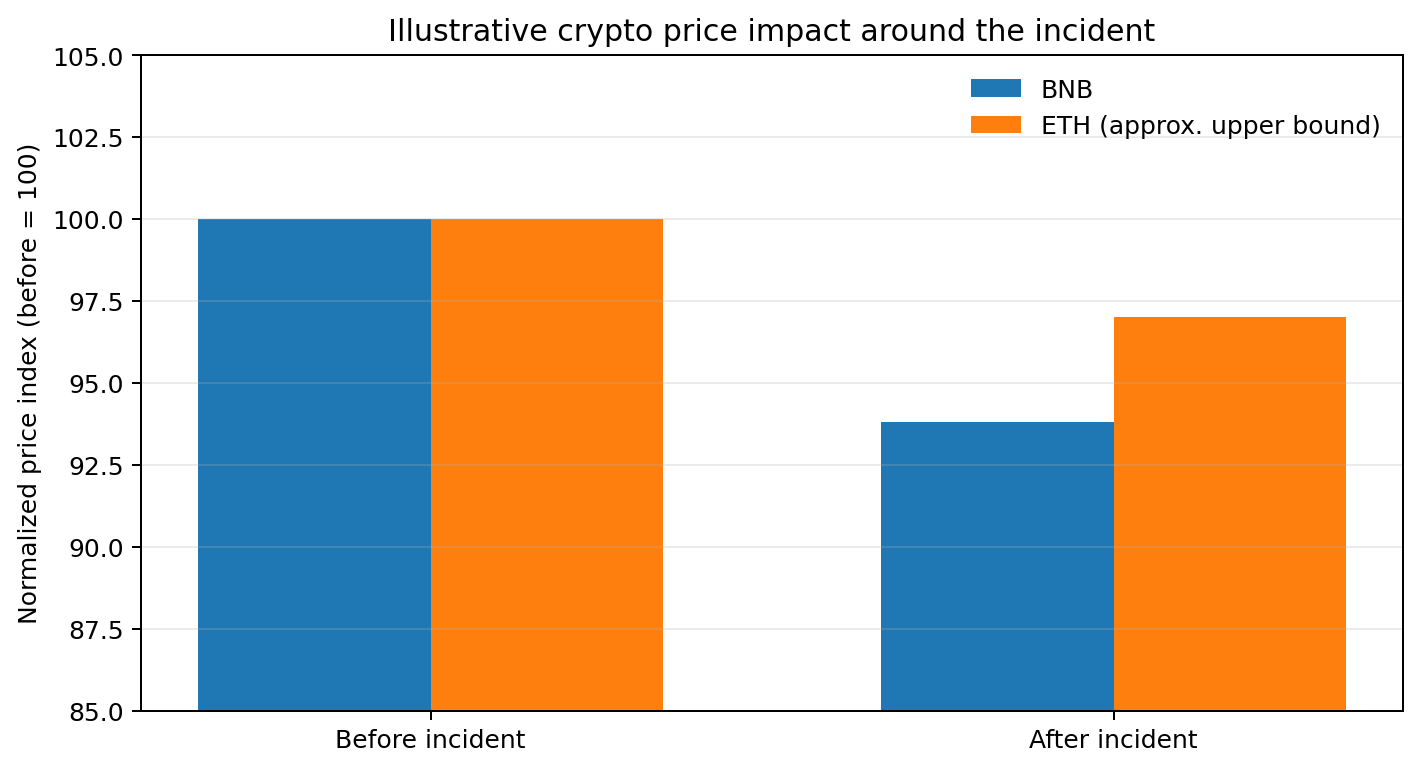
The incident reportedly triggered selling pressure across cryptocurrency markets. Bitcoin was reported to have fallen to a six-week low near $76,368. Ethereum declined more than 3%, reaching approximately $2,178, while BNB fell around 6.2% to approximately $702. The effects extended beyond Binance-related tokens, with publicly traded cryptocurrency companies also facing declines amid broader concerns about exchange security. Markets later showed signs of stabilization, but the episode illustrated how a security failure at a major exchange can affect confidence across the digital-asset ecosystem.
Conclusion
The October 29 Binance incident underscores the financial and reputational risks associated with centralized cryptocurrency exchanges. Although approximately $6.3 billion was reportedly stolen, asset freezes, corporate reserves and recovery efforts offered some reassurance to customers. The final investigation, technical post-mortem and complete asset breakdown remain important developments to watch. Investors should prioritize verified announcements, secure wallet practices and independent research rather than reacting to unconfirmed claims.
Sources
- Binance — Security Incident Update #2 (October 30, 2026)
- Binance — Co-CEOs update: 80% of losses covered, withdrawals restarting in phases, Proof of Reserves due Monday (October 30, 2026)
- TRM Labs — North Korea steals $6.36 billion from Binance in the largest hack in history
- Reuters — Binance freezes assets after $6.3 billion security breach (via ThePrint)
- The Economic Times — Binance sets aside $6.34 billion to cover crypto hack losses